Terminale · Voie générale et technologique · Voie professionnelle
Learning in the Age of AI
A learning journey that starts with Alan Turing
In 1950, he asked: “Can machines think?” Today, a machine can answer almost any question. So who does the thinking?
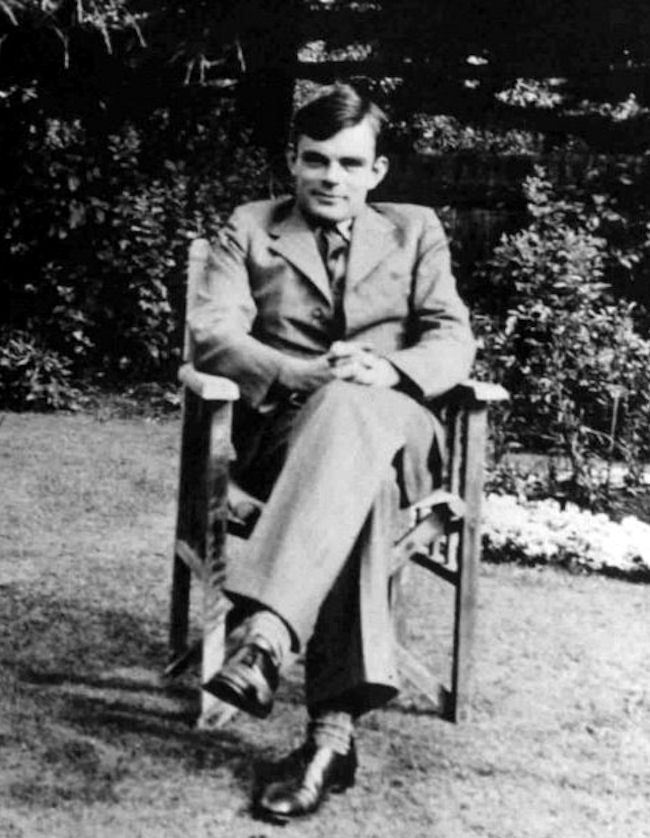
Alan Turing (1912 to 1954), British mathematician and Second World War codebreaker, often called the father of computer science and of artificial intelligence.
Alan Turing in the 1930s · Photo: author unknown, Wikimedia Commons, public domain
Message à transmettre à la classe
Alan Turing, l’homme qui a appris aux machines à penser
Pourquoi cet homme ?
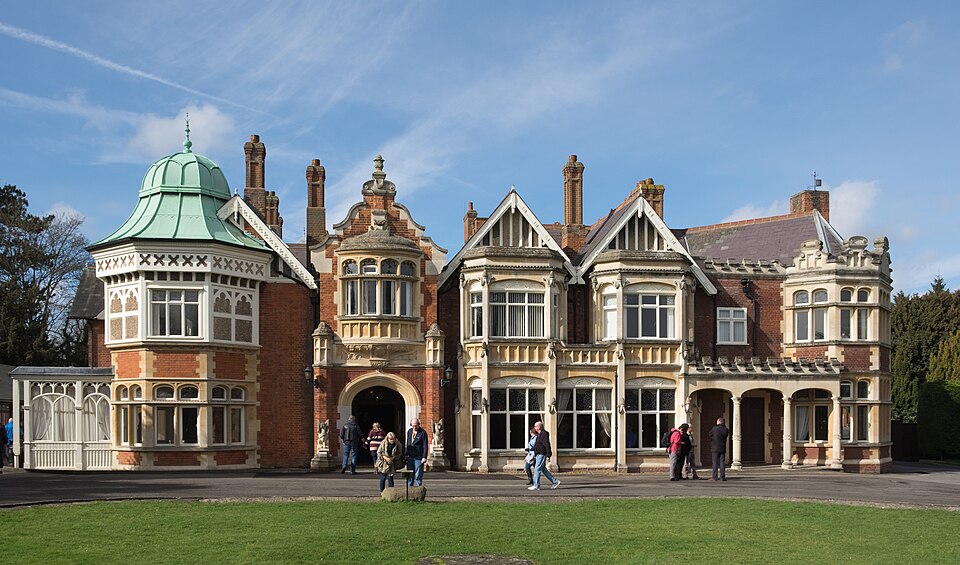
Pendant la Seconde Guerre mondiale, Alan Turing travaille en secret dans un manoir anglais, Bletchley Park. Avec son équipe, il parvient à déchiffrer les messages codés de l’armée allemande. Les historiens estiment que ce travail a raccourci la guerre et sauvé un grand nombre de vies.
Après la guerre, il imagine des machines capables de calculer, puis de raisonner. Sans lui, pas d’ordinateur, pas de téléphone, pas d’intelligence artificielle.
En 1952, il est condamné parce qu’il est homosexuel, ce qui est alors un délit au Royaume-Uni. Pour éviter la prison, il doit accepter une castration chimique. Il perd son autorisation de travailler sur les secrets d’État. Il est humilié, mis à l’écart.
En juin 1954, on le retrouve mort chez lui. Il a 41 ans. L’enquête conclut à un suicide.
Ce que ça dit de nous aujourd’hui
Chaque fois que vous parlez à une intelligence artificielle, vous utilisez une idée de Turing. En 1950, il se demandait déjà si une machine pourrait un jour se faire passer pour un humain dans une conversation.
Son histoire pose aussi une question plus dure : comment un pays peut-il punir l’homme qui l’a aidé à gagner la guerre ? Il a fallu attendre 2013 pour que la reine le gracie.
Ce que vous allez peut-être ressentir
De l’admiration, puis de la colère. Certains se demanderont comment on a pu en arriver là. C’est une bonne question, gardez-la.
Ce qui n’a pas bougé depuis
L’homme qui a ouvert la porte au monde moderne n’a pas trouvé de place dans ce monde. La stigmatisation et la honte qu’on lui a imposées peuvent détruire n’importe qui, même un génie, même un héros de guerre.
Aujourd’hui encore, des jeunes souffrent d’être rejetés pour ce qu’ils sont. Parler de Turing, c’est aussi leur dire qu’ils ne sont pas seuls.
Note aux collègues : ce thème peut faire écho à des situations personnelles. Pensez à signaler à vos élèves qu’ils peuvent en parler à l’infirmière ou au CPE, ou appeler le 3114.
Madame Carole Paoli Pompougnac
Today, many people are afraid of artificial intelligence. Yet it was human beings, not machines, who drove Alan Turing to his death.
Aujourd’hui, tout le monde a peur de l’intelligence artificielle. Pourtant, ce sont bien des hommes, et non des machines, qui ont conduit Alan Turing à la mort.
Introduction
What is at stake in this learning journey
Artificial intelligence is already in your pocket. In a few seconds, a chatbot can write an essay, translate a text, solve a maths problem or invent a story. Schools in the English-speaking world have had to react quickly: some banned these tools, others decided to teach students how to use them. Nobody can ignore the question any more.
But a machine that gives the right answer does not necessarily understand it, and a student who copies the right answer has not learnt anything. AI can also make mistakes, invent facts and repeat the prejudices hidden in the data it learnt from. So the real question is not “Should we use AI?” but “How do we stay in control of our own thinking?”
On this learning journey, you will discover where AI comes from, how schools in the United States and international organisations are dealing with it, why machines can be biased, and what a quiet, moving film, After Yang, says about learning from a machine. You will study real cases, from a Japanese novelist who won a top prize with the help of ChatGPT to a writer wrongly or rightly accused of using it, and you will read the news like a journalist. You will also train your ear and your voice with demanding pronunciation work, debate like a school board, and finally write and present your own class charter on AI. That is what being an informed citizen means today.
Why a learning journey?
Some words lock learning in place: one step after another, behind closed doors. A journey opens the road. You set off with your suitcase, you meet places, voices and ideas you did not expect, and you come back richer, with memories and knowledge that are truly yours. Nobody wants to travel to a dull destination: this one has been chosen to be worth the trip.
Pourquoi un learning journey ?
Le mot « séquence » enferme : une étape après l’autre, portes closes. Un voyage, lui, ouvre la route. Les élèves partent avec leur valise, rencontrent des lieux, des voix et des idées inattendus, et reviennent enrichis de souvenirs et de savoirs qui leur appartiennent. On ne donne à personne l’envie de partir en promettant une destination terne : la destination doit valoir le voyage.
How every session works
The eight sessions
- 1 · Can machines think? → Alan Turing and the birth of AI
- 2 · AI goes to school → ban, embrace or regulate?
- 3 · Bias and deepfakes → when machines get it wrong
- 4 · After Yang → a film about learning from a machine
- 5 · Pronunciation lab → sound like a speaker, not a reader
- 6 · Read the news → how the press tells an AI story
- 7 · The debate → a school board meeting
- 8 · Final task → our class AI charter, written and presented
L’intérêt de cette séquence dans les programmes
La séquence répond à un objet d’étude nommé explicitement par le nouveau programme d’anglais du cycle terminal : « Nouvelles modalités d’apprentissage à l’heure de l’intelligence artificielle dans le monde éducatif anglophone ». Elle fait travailler les cinq activités langagières et la médiation, l’esprit critique face aux outils numériques et une prononciation exigeante. Les mêmes tâches valent pour la voie générale et technologique et pour la voie professionnelle ; seules les longueurs attendues varient.
Fil conducteur : élever le niveau sans effrayer les élèves. Un contenu exigeant, qui doit impressionner, rendu accessible par des étapes claires, des modèles, des enregistrements et trois niveaux d’exigence (B1, B1+, B2). Pas une minute sans objectif : chaque séance commence par une tâche d’entrée en cours et chaque minute est prévue dans le minutage proposé au professeur.
| Activité langagière (CECRL) et compétence | Où dans la séquence |
|---|---|
| Compréhension de l’oral | Enregistrements des séances 1 à 4, 6 et 7, titres de presse lus (séance 6), bande-annonce d’After Yang (séance 4), reconnaissance des accents britannique et américain (séance 2) |
| Compréhension de l’écrit | Textes sur Turing, sur les politiques scolaires face à l’IA et sur les biais (séances 1 à 3), études de cas Rie Kudan et Thélyson Orélien (séances 2 et 3), article de presse de CNN analysé en détail et comparé à The Japan Times (séance 6) |
| Expression écrite | Tâches à trois niveaux à chaque séance, brève de presse de 80 à 150 mots (séance 6), charte de classe de 100 à 200 mots (séance 8) |
| Expression orale en continu | Prises de parole guidées, lecture expressive de titres de presse (séance 6), présentation de 4 à 5 minutes (séance 8) |
| Interaction orale | Débat en conseil d’établissement (séance 7), échange de 5 minutes après la présentation (séance 8) |
| Médiation | Expliquer en anglais simple à un ami le revirement de New York (séance 2) ; réécrire un titre de presse en anglais courant et inversement (séance 6) |
| Phonologie et prosodie | Un atelier « Say it right » à chaque séance, un laboratoire complet (séance 5), formes faibles du conditionnel (séance 7) |
| Grammaire | Le conditionnel complet (modaux, conditionnels 1, 2 et 3, erreurs fréquentes, exercices à trois niveaux) en séance 7, réemployé dans le débat et dans la charte (séance 8) |
| Esprit critique et citoyenneté | Biais, désinformation, hypertrucages, présomption d’innocence face aux détecteurs d’IA, fait et opinion, vérification des sources (séances 3, 6, 7 et 8) |
Ancrage dans les programmes et le référentiel
Voie générale et technologique · Terminale
Programme d’anglais du cycle terminal (BO n° 22 du 29 mai 2025, annexe « Programme d’anglais pour les classes de lycée général et technologique »).
Axe 5 « Citoyenneté et mondes virtuels » : « À l’heure des mondes virtuels, quels sont les enjeux démocratiques dans les aires anglophones ? » Objet d’étude : « Nouvelles modalités d’apprentissage à l’heure de l’intelligence artificielle dans le monde éducatif anglophone ».
Lexique « Intelligence artificielle » proposé par le programme. B1 : dangerous, profiling, near future, man versus machine, data, deep learning, guardrails, prompt, analytics, predictive. B2 : harmful, harmless, facial recognition, to hand over, deep fake, conversational bots, generative writing, flaws, loopholes, ethics, to outpace, prescriptive.
Préambule, « Les usages numériques » : « Le développement rapide des intelligences artificielles (IA) multiplie par ailleurs les possibilités de recherche, de création, de rédaction et de traduction, voire d’interaction avec un agent conversationnel. » et « Afin de se prémunir contre les biais culturels et la désinformation, l’élève est amené en cours de langue à développer son esprit critique dans l’usage des outils à sa disposition. »
Phonologie : le programme définit la prosodie comme « incluant l’intonation, l’accent de mot, l’accent de phrase, le rythme et le débit » ; en terminale, il vise les schémas intonatifs, l’accentuation du mot selon sa composition et, au niveau B2, selon sa nature (nom ou verbe : record/record).
Liens possibles : axe 3 « Fictions et réalités » (objet « Quand la science-fiction nourrit l’innovation scientifique » : After Yang) ; axe 4 « Enjeux et formes de la communication » (objet « Chacun sa vérité ? Le défi du complotisme » : désinformation, algorithmes ; c’est l’ancrage de la séance 6 sur la presse). Lexique « Journalisme » du programme, B1 : to broadcast, partial/impartial, to deceive, high-quality press, (in)accurate, to report, reporter, tabloids, headlines, (a piece of) information/news ; B2 : reliable, trustworthy, unreliable, to mislead, to spread the word, gutter press, to hit the headlines, a flow of information, media literacy.
Voie professionnelle · Terminale bac pro
Programme de langues vivantes des classes préparant au baccalauréat professionnel (arrêté du 3 avril 2019, BO spécial n° 5 du 11 avril 2019). Du niveau B1 aux niveaux B1+/B2, l’élève s’entraîne notamment à :
- « s’exprimer à l’écrit et à l’oral au sujet d’une problématique sociétale, éthique ou environnementale » ;
- « participer à un débat, à une table ronde, défendre et justifier sa position, réfuter celle de son interlocuteur, chercher à convaincre » ;
- « mettre en évidence ou mettre en valeur les spécificités, qualités, défauts, avantages, inconvénients, etc. d’un produit, d’un système, d’une solution » ;
- « rechercher et comprendre des informations relatives à des formations en ligne/à distance » ;
- « comprendre, analyser et rendre compte d’articles de presse, de documentaires, d’affiches, de spots publicitaires, de campagnes d’information » (séance 6).
Thèmes d’étude : « école, vie scolaire » et « caractéristiques et spécificités du système scolaire dans le(s) pays de la langue étudiée ». Le programme demande aussi aux professeurs de « prendre toute leur part dans la lutte contre la manipulation de l’information » et rappelle que « l’entraînement à la prise de parole demande un travail spécifique et régulier en vue de l’amélioration de la prononciation ».
Épreuve (arrêté du 17 juin 2020, annexe V, BO n° 30 du 23 juillet 2020) : la séance 8 entraîne à la situation B, 10 minutes, avec une expression orale en continu de 5 minutes maximum puis une interaction de 5 minutes maximum ; la prise de parole « ne peut pas consister en la lecture d’un texte préalablement rédigé in extenso ».
Lien avec l’économie-gestion : module 4 « Les mutations de la relation de travail », question « En quoi la relation de travail est-elle modifiée par le développement du numérique ? » (le programme cite l’intelligence artificielle).
Mêmes tâches pour les deux voies. Seules les longueurs attendues changent selon le niveau :
| Niveau | Pour qui | Écrit (séance 8) | Oral (séance 8) |
|---|---|---|---|
| B1 | LVB voie générale · LVB bac pro (niveau visé) | 100 à 120 mots | 4 min, carte de mots-clés |
| B1+ | LVA bac pro (niveau attendu à l’examen) | 120 à 150 mots | 4 à 5 min, quelques mots-clés |
| B2 | LVA voie générale · LVA bac pro (niveau visé en fin d’études) | 180 à 200 mots | 5 min, sans notes rédigées |
Sources : programme d’anglais du cycle terminal (BO n° 22 du 29 mai 2025) ; programme de langues vivantes de la voie professionnelle (BO spécial n° 5 du 11 avril 2019) ; définition de l’épreuve de langue vivante du baccalauréat professionnel (BO n° 30 du 23 juillet 2020) ; programme d’économie-gestion de la voie professionnelle.
Why this learning journey fits the programme
The official programme for Terminale asks you to study “new ways of learning in the age of artificial intelligence in the English-speaking world of education”. In the vocational programme, you train to understand and analyse press articles, to discuss an ethical issue, to debate and defend your position, and to present the advantages and disadvantages of a system. In both cases, you are expected to think critically about the digital tools you use and to speak clearly and confidently.
Mode d’emploi. Huit onglets, soit un socle de onze heures de 55 minutes : une heure par onglet, deux heures pour « Read the news » (séance 6), deux pour la séance 7 (le conditionnel, puis le débat) et deux pour la tâche finale (séance 8), puis les séances de présentation (10 minutes par groupe). Deux études de cas peuvent ajouter chacune une heure, minutée elle aussi : Rie Kudan (séance 2) et l’affaire Thélyson Orélien avec les détecteurs d’IA (séance 3). Les encadrés « Real life » des autres onglets se lisent en quelques minutes ou à la maison. Chaque séance s’ouvre sur une tâche d’entrée en cours (bell-ringer) de cinq minutes, puis suit le minutage indiqué dans l’encadré professeur. Les réponses s’affichent avec le bouton Answers ; l’aide en français avec + Français.
Astuce pratique. Le bell-ringer est visible à l’écran avant l’entrée des élèves : ouvrez la séance, cliquez sur Project full screen avant la sonnerie. Les élèves se mettent au travail en entrant, et vous faites l’appel pendant qu’ils travaillent.
Les principes qui fondent cette séquence sont réunis dans la Charte du cours →
Copy and complete in your notebook. Work alone, in silence.
- A machine can … better than me. (three sentences)
- A machine will never … (two sentences)
Ideas: calculate · translate · remember · recognise faces · drive · feel · love · choose · be creative · make a joke · tell the truth
Entrée en cours. Le cadre est affiché avant l’arrivée des élèves (bouton Project full screen). Ils écrivent dès qu’ils entrent ; vous faites l’appel pendant ce temps. Réutilisation (minutes 5 à 10) : trois élèves lisent une phrase de chaque colonne, vous notez au tableau les verbes qui reviennent dans « will never » (souvent feel, think, love). Vous écrivez alors la question de Turing : Can machines think?
Session 1 · Axis 5 · Citizenship and virtual worlds
Can machines think?
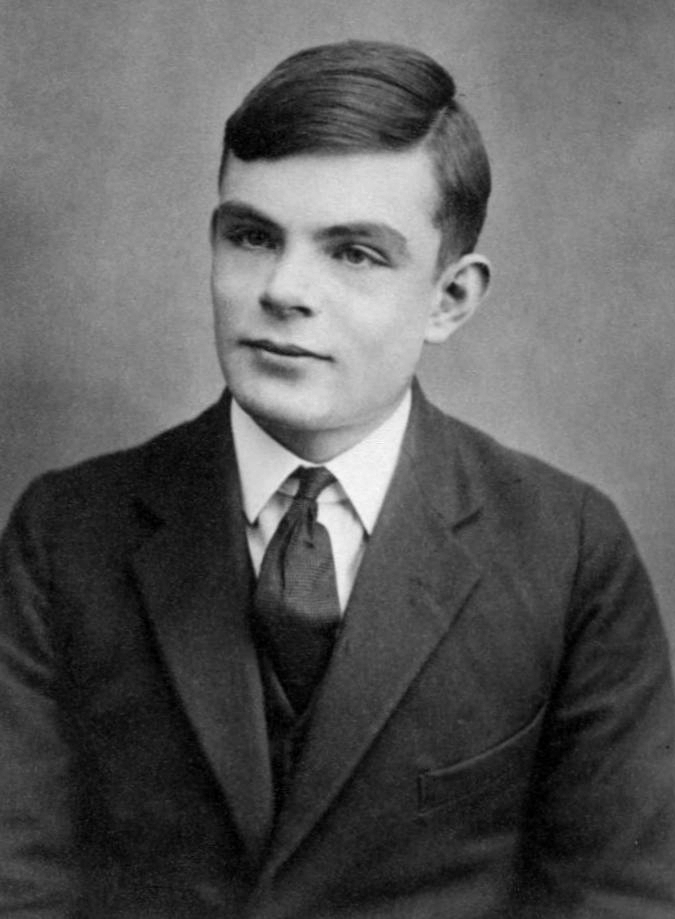
Who was Alan Turing?
Alan Turing (1912 to 1954) was a British mathematician. During the Second World War, he helped break the codes of German messages at Bletchley Park. He is often called the father of computer science.
In 1950, he asked a question that still divides scientists today: can machines think?
Since 2021, his portrait has been on the Bank of England’s £50 note.
From Turing’s question to ChatGPT
Computer voice: Emma (British English).
Transcript (only after the two listenings)
In 1950, the British mathematician Alan Turing published an article that began with a simple question: Can machines think? Turing did not try to define thinking. Instead, he imagined a game. A person asks questions in writing to two hidden players, a human and a machine. If the person cannot tell which one is the machine, then, Turing argued, we should accept that the machine is, in a way, intelligent. Today, this is known as the Turing test. Six years later, in 1956, a group of researchers met at Dartmouth College, in the United States, for a summer workshop on a new field. They called it artificial intelligence. For decades, progress was slow. Then, in November 2022, a chatbot called ChatGPT was released to the public. Within a few months, it had more than a hundred million users. Turing’s question was suddenly back in every classroom.
First listening: the big picture
Second listening: the details
Milestones
1950 → Alan Turing asks “Can machines think?” and imagines the imitation game, now called the Turing test.
1956 → At Dartmouth College (USA), researchers hold a summer workshop on “artificial intelligence”.
1997 → IBM’s computer Deep Blue beats the world chess champion, Garry Kasparov.
2016 → Google DeepMind’s AlphaGo beats Lee Sedol, one of the best players of the game of Go.
2022 → OpenAI releases ChatGPT to the public on 30 November.
2025 → In a study at the University of California San Diego, people chatted for five minutes with a human and a machine at the same time. When the chatbot GPT-4.5 was told to play a shy young person, it was chosen as “the human” 73% of the time: more often than the real humans.
Can a machine fool the experts? Two real cases
The photo that was not a photo (April 2023). The German artist Boris Eldagsen won the creative category of the Sony World Photography Awards, one of the most prestigious prizes in photography, with a black and white image of two women. A few days later, he revealed that the image had been created with an AI generator, DALL-E 2, and refused the prize: “AI is not photography,” he wrote. He said he wanted to test the competition and start a debate.
Sources: BBC News, 18 April 2023 · The Guardian, 17 April 2023
The machine that seemed more human than humans (2025). Cognitive scientists Cameron Jones and Benjamin Bergen organised Turing’s imitation game with real people. Each judge chatted for five minutes with a human and with a machine, then chose “the human”. GPT-4.5, told to adopt a humanlike personality, was chosen 73% of the time. An old program from the 1960s, ELIZA, was chosen only 23% of the time.
Sources: C. R. Jones and B. K. Bergen, “Large Language Models Pass the Turing Test”, March 2025, later published in PNAS
Your opinion in one sentence: If a machine wins the imitation game, does it think, or does it only imitate thinking? I believe that… because…
Words from the official programme
Match each word with its definition.
Word stress: the suffix moves the stress
In English, syllables do not all have the same weight: one syllable is strong, the others are weak. And with some suffixes, the stress moves. Rule: with -ic, -ical, -ion and -ity, the stress falls on the syllable just before the suffix.
| Base word | Stress moves with the suffix |
|---|---|
Each word is said once. Listen, then repeat it three times, louder on the red syllable.
Your turn: find the strong syllable
Apply the rule without listening. Then check with the buttons above.
Two sentences to master
Shadowing means speaking at the same time as the voice, like a shadow. Step 1: listen to the slow version. Step 2: speak with the slow version. Step 3: speak with the normal version, without reading.
Speak or write: can machines think?
In the Turing test, a person asks questions in writing to a human and a machine. If the person cannot tell which one is the machine, the machine passes the test. In my opinion, some chatbots would pass it, because their answers sound very human. However, they sometimes make strange mistakes that a human would never make.
A calculator gives the right answer to 345 × 12. Does it understand multiplication? And a chatbot that writes a beautiful poem about love: does it know what love is?
Alan Turing, mathématicien britannique, a posé en 1950 la question « Les machines peuvent-elles penser ? ». Son test : si un humain ne parvient pas à distinguer, à l’écrit, une machine d’un autre humain, on peut dire que la machine est « intelligente ». Retiens la règle d’accentuation : avec -ic, -ical, -ion, -ity, l’accent tombe sur la syllabe juste avant le suffixe.
| Minutes | Déroulement (55 min) |
|---|---|
| 0 → 5 | Bell-ringer affiché avant l’entrée, appel pendant que les élèves écrivent. |
| 5 → 10 | Réutilisation : lecture de phrases, verbes de « will never » au tableau, question de Turing. |
| 10 → 20 | Portrait de Turing (2 min), deux écoutes avec les deux quiz, puis transcription. |
| 20 → 26 | Frise et mots du programme (appariement en binômes, correction rapide). Photo de Bletchley Park en 30 secondes. |
| 26 → 38 | Say it right : règle, écoute, répétition chorale puis individuelle, quiz « find the strong syllable », shadowing. |
| 38 → 50 | Production à trois niveaux : chacun choisit son niveau ; les plus rapides passent au niveau suivant. Lecture de deux productions. |
| 50 → 55 | Ticket de sortie : une phrase « Today I learnt that… » avec un mot accentué souligné. |
| Prolongement | Encadré « Real life » (Eldagsen, test de Turing de 2025) : lecture à la maison, ou 10 minutes en début de séance 2 à la place de la réutilisation du bell-ringer, avec la phrase d’opinion à l’oral. |
Prononciation : faire répéter d’abord en chœur (personne n’est exposé), puis par rangée, puis individuellement. Corriger chaque erreur d’accent sans interrompre la prise de parole : reprise juste après, par le professeur, du mot correct.
Sources : A. M. Turing, « Computing Machinery and Intelligence », Mind, 1950 ; Bank of England (billet de 50 livres, juin 2021) ; OpenAI (lancement de ChatGPT, 30 novembre 2022) ; BBC News et The Guardian (affaire Boris Eldagsen, 17 et 18 avril 2023) ; C. R. Jones et B. K. Bergen, prépublication arXiv de mars 2025 puis PNAS (73 % pour GPT-4.5 avec consigne de personnage, 23 % pour ELIZA). Charte du cours →
Copy the question and answer it in your notebook. Work alone.
Would you ban AI at school?
- Write YES or NO.
- Give one reason in 15 words maximum. Start with: I would ban it because… or I wouldn’t ban it because…
- Underline the most important word of your sentence.
Entrée en cours. Cadre projeté avant l’entrée ; appel pendant l’écriture. Réutilisation (minutes 5 à 8) : vote à main levée, deux raisons par camp au tableau. Les mêmes élèves revotent en fin de séance (minute 52) : « Did you change your mind? Why? »
Session 2 · New ways of learning in the age of AI
AI goes to school
New York, UNESCO and two students
Computer voices: Heart (American English, news report), Michael (American English, Jordan) and Emma (British English, Chloe).
Transcript (only after the two listenings)
Report: In January 2023, New York City, the largest school system in the United States, blocked ChatGPT on school computers and networks. Officials said the tool could give quick and easy answers, but that it did not build critical thinking. A few months later, in May 2023, the city changed its mind. The schools chancellor wrote that the first reaction had come from knee-jerk fear, and that students would live and work in a world where understanding AI was crucial. That same year, in September, UNESCO published the first global guidance on generative AI in education. It asked governments to protect students’ data, to train teachers, and to set a minimum age for the use of AI tools in the classroom.
Jordan: Honestly, I use it for everything. It explains math better than my textbook.
Chloe: But do you actually learn anything, or do you just copy what it says?
Jordan: I check it. Well, most of the time.
Chloe: That’s the problem. If you can’t do it without the machine, it isn’t really your knowledge, is it?
Listen and choose
Ban, embrace or regulate? Three answers to one question
Ban. When ChatGPT appeared at the end of 2022, many teachers panicked. In January 2023, New York City Public Schools, the largest school system in the United States, restricted access to it on school devices and networks. Officials feared that students would stop thinking for themselves: the tool “does not build critical-thinking and problem-solving skills”, a spokesperson explained.
Embrace. Four months later, the schools chancellor, David C. Banks, admitted that the ban had been driven by “knee-jerk fear”. Students, he wrote, would live and work in a world where understanding generative AI was crucial. The city promised resources to help teachers use AI in class.
Regulate. In September 2023, UNESCO published the first global guidance on generative AI in education. It did not ask for a ban. Instead, it asked governments to protect students’ data and privacy, to train teachers, to check that tools are safe and useful for learning, and to consider a minimum age for using them in the classroom.
Sources: Chalkbeat New York, 3 January and 18 May 2023; UNESCO, Guidance for generative AI in education and research, 7 September 2023.
True or false? Justify with the text.
Weak forms: the small words almost disappear
In natural English, small grammar words (to, for, of, and, can, was, at, a, the) are not stressed: their vowel becomes a short, relaxed sound, /ə/ (schwa). to → /tə/, for → /fə/, of → /əv/, can → /kən/, was → /wəz/. This is why native speakers seem to speak fast: they do not, they simply do not stress the small words.
But at the end of a sentence, or when it is stressed, the small word keeps its strong form: Yes, it was. /wɒz/ · What are you looking at? /æt/
Dictation of the invisible words
Hide the sentences above. Listen to each recording (normal speed) and write the missing small words.
Explain it in simple English
A friend has heard that “New York banned AI in schools”. In four simple sentences in English, explain what really happened in January and in May 2023, and what UNESCO recommends.
Sentence starters: In fact, in January 2023… · Then, in May 2023… · UNESCO says that… · So it was not…
Write: ban, embrace or regulate?
In January 2023, New York blocked ChatGPT on school computers. In May 2023, the city changed its mind. UNESCO asks governments to protect students’ data and to train teachers. I think AI should be allowed in class, but not during tests.
Case study: a prize-winning novel written with ChatGPT

Rie Kudan and the Akutagawa Prize (Japan, January 2024)
Computer voices: Emma and George (British English).
On 17 January 2024, the Japanese writer Rie Kudan, aged 33, won the Akutagawa Prize, Japan’s most famous award for promising new writers of fiction. Members of the prize committee described her novel, Sympathy Tower Tokyo, as “practically flawless”. The story follows an architect who is asked to design a comfortable high-rise prison in Tokyo, and artificial intelligence is one of its themes.
Then came the surprise. In her acceptance speech, the author explained that she had used generative AI such as ChatGPT, and that probably about 5% of the text came directly from it. Some readers noted that, in the book, certain passages are clearly presented as answers given by an AI. A writer on the prize committee said that the jury did not see her use of AI as a problem.
On social media, reactions were divided. Some readers found her approach creative and wanted to read the book. Others called it unfair, or “disrespectful” to authors who write without AI. One user asked a sharp question: if AI is banned in chess and go competitions, why should it be allowed in a literary prize?
Sources: CNN, 19 January 2024 · The Japan Times, 19 January 2024. Her name is written “Rie Kudan” by CNN and “Rie Qudan” by The Japan Times. In session 6, you will compare how these two newspapers told the story.
Check your understanding
Imagine another story: conditionals
Unreal present: If + preterite, would + verb → If AI wrote the whole book, the prize would mean nothing.
Unreal past (B2): If + past perfect, would have + past participle → If she had hidden it, nobody would have known.
Full rules, common mistakes, recordings and exercises at three levels: Grammar focus: the conditional (tab 7) →
Chloe says: “If you can’t do it without the machine, it isn’t really your knowledge.” Is that true for a calculator? For a dictionary? For a chatbot?
New York a d’abord bloqué ChatGPT (janvier 2023), puis a changé d’avis (mai 2023). En janvier 2024, la romancière japonaise Rie Kudan a reçu le prix Akutagawa, le grand prix littéraire japonais pour les jeunes auteurs, et a reconnu qu’environ 5 % de son roman venaient directement de ChatGPT. L’UNESCO recommande d’encadrer, pas d’interdire : protection des données, formation des enseignants, âge minimum. En prononciation, les petits mots grammaticaux (to, for, of, can, was) se prononcent avec une voyelle très faible, le « schwa » /ə/, sauf en fin de phrase.
| Minutes | Déroulement (55 min) |
|---|---|
| 0 → 5 | Bell-ringer affiché avant l’entrée, appel pendant l’écriture. |
| 5 → 8 | Réutilisation : vote, deux raisons par camp au tableau. |
| 8 → 18 | Deux écoutes, quiz, repérage des accents (question 5 : faire réécouter la dernière réplique de Chloe). |
| 18 → 26 | Lecture en binômes « Ban, embrace or regulate? », vrai ou faux justifié. |
| 26 → 37 | Say it right : formes faibles, répétition, dictée des mots invisibles. |
| 37 → 42 | Médiation orale en anglais simple (deux élèves), correction. |
| 42 → 52 | Écriture à trois niveaux. |
| 52 → 55 | Nouveau vote : qui a changé d’avis, et pourquoi ? |
Étude de cas Rie Kudan : séance complémentaire de 55 minutes (ou travail à la maison suivi de 20 minutes en classe).
| Minutes | Déroulement (55 min) |
|---|---|
| 0 → 5 | Bell-ringer projeté pendant l’appel : « A novel partly written by ChatGPT wins a top prize. Fair or unfair? One sentence. » |
| 5 → 8 | Réutilisation : trois phrases lues, vote à main levée. |
| 8 → 20 | Photo de Tokyo (30 secondes), deux écoutes sans texte, puis lecture et quiz. |
| 20 → 30 | Grammaire : les deux conditionnels, exercice, correction. |
| 30 → 40 | Débat express en binômes : « Where is the line between help and cheating? » (chaque binôme doit employer un conditionnel). |
| 40 → 52 | Écriture à trois niveaux. |
| 52 → 55 | Nouveau vote : qui a changé d’avis ? |
Faits vérifiés : prix Akutagawa remis le 17 janvier 2024 à Rie Kudan (graphie de CNN ; The Japan Times écrit Qudan), 33 ans, pour Tokyo-to Dojo-to (Sympathy Tower Tokyo) ; le comité l’a jugé « practically flawless » ; l’autrice a dit qu’environ 5 % du texte venaient directement de l’IA générative ; un membre du comité, l’écrivain Keiichiro Hirano, a écrit sur X que le jury n’y voyait pas de problème. Sources : CNN et The Japan Times, 19 janvier 2024.
Sources vérifiées : Chalkbeat New York (3 janvier 2023, décision de restreindre l’accès ; 18 mai 2023, tribune du chancelier David C. Banks) ; UNESCO, communiqué du 7 septembre 2023 sur le Guidance for generative AI in education and research. Charte du cours →
Real or fake? Copy the four statements and write R (real) or F (fake) next to each one.
- A chatbot can invent a book that does not exist.
- AI systems are always neutral because they are machines.
- AI can copy a person’s voice.
- In 2018, a study showed that some face-analysis systems made many more mistakes with darker-skinned women.
Entrée en cours. Cadre projeté avant l’entrée ; appel pendant ce temps. Réutilisation : on ne corrige pas tout de suite. Les élèves vérifient eux-mêmes leurs réponses pendant l’écoute (minutes 10 à 18). Réponses : 1 R · 2 F · 3 R · 4 R.
Session 3 · Critical thinking
Bias and deepfakes: when machines get it wrong
A machine is only as fair as its data
Computer voice: George (British English).
Transcript (only after the two listenings)
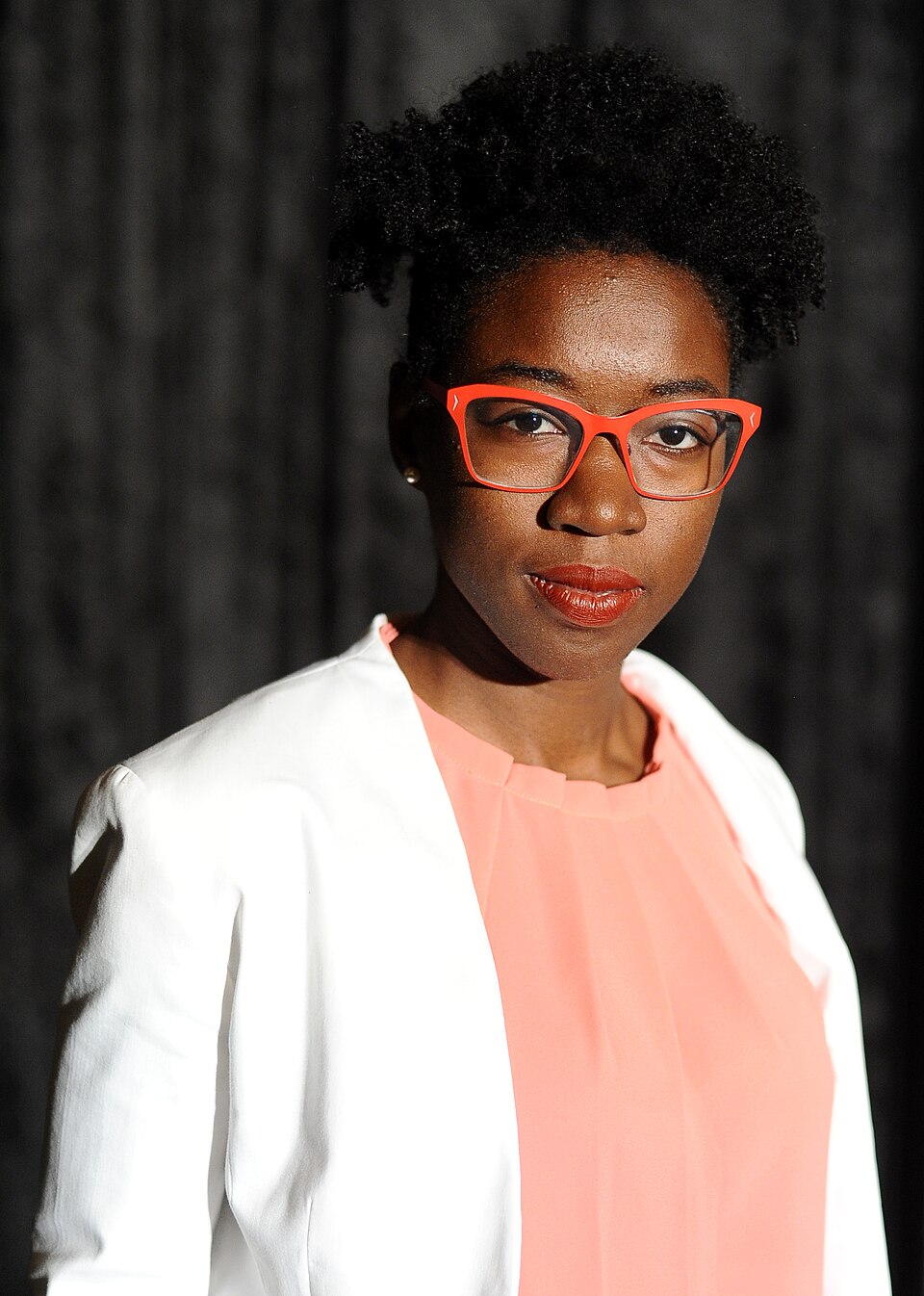
In 2018, two researchers, Joy Buolamwini and Timnit Gebru, tested three facial analysis systems sold by major technology companies. The systems had to guess whether a face was male or female. For lighter-skinned men, the error rate was never higher than 0.8 per cent. For darker-skinned women, it rose to 34.7 per cent. Why? Because the systems had learnt from data that contained mostly lighter-skinned faces. A machine is only as fair as the data it learns from. Today, the same question applies to the chatbots that students use every day. They can invent facts, quote books that do not exist, or repeat the stereotypes hidden in their training data. And with deepfakes, fake images, voices and videos created by AI, seeing is no longer believing.
Two real deepfakes, two victims
A fake boss on a video call (Hong Kong, January 2024). An employee of the British engineering company Arup joined a video conference with the company’s finance director and several colleagues. All of them were deepfakes. Convinced, the employee made 15 transfers: 200 million Hong Kong dollars, about 25 million US dollars.
A fake voice at school (Maryland, USA, January 2024). A recording in which the principal of Pikesville High School seemed to make racist and antisemitic remarks spread online. He was suspended. Experts consulted by the police found that the voice had been generated with AI; the school’s former athletic director was sentenced to four months in jail in April 2025. The principal was the victim.
Sources: CNN, 16 May 2024 · AP, April 2025
Listen and complete
B2 words from the programme
Four steps to check an AI answer
Minimal pairs: one sound changes everything
A chip is in your computer; something cheap costs little money. If you mix up /ɪ/ (short, relaxed) and /iː/ (long, smiling), you change the word. The same happens with /s/ and /θ/ (tongue between the teeth), at the beginning of a word (sink, think) or at the end (mouse, mouth).
| Short /ɪ/ | Long /iː/ | /s/ | /θ/ |
|---|---|---|---|
Which word do you hear?
Each recording says “The word is…”. Choose the word.
The -ate trap
The ending -ate is pronounced /eɪt/ in most verbs (to generate, to automate) but /ət/ in most adjectives (accurate, private).
Case study: can a machine detect a machine?
The Thélyson Orélien affair
Computer voices: George and Emma (British English). Summary of the case.
Thélyson Orélien, 38, is a Haitian-Canadian writer born in Haiti who lives in Quebec. His novel C’était ça ou mourir (“It was that or die”), published in Montreal in the spring of 2026 and then in France, became one of the best-selling novels of the autumn and won the Fnac novel prize.
On 21 September 2026, an anonymous account on X, which had only 92 followers, claimed that the novel had been written “almost entirely” by AI. The claim was based on the score of a detector called Pangram. The post was seen more than three million times. The author denies using AI: he says he started the novel in 2017 and finished his first draft in 2019, before tools like ChatGPT were available to the public. His French publisher spoke of a “campaign of hate”.
What do the detectors say? The AFP news agency tested the same extracts with eight tools, and the results were completely different; one tool said that the passages were “very probably written by a human”. Pangram, on the other hand, is considered reliable by several researchers, and the Montreal newspaper La Presse obtained a score of 94% “AI” for the whole novel. But no detector is 100% reliable: the French news site TF1 Info found that Pangram classified a famous poem by Victor Hugo as human, and then as written by AI when a single line was removed.
A second, different problem. On 23 September, La Presse and Radio-Canada revealed that several articles and a short story published under his name in 2012 and 2013 had been partly copied from other authors. That is plagiarism, not AI. Two days later, the Académie Goncourt removed the novel from its list for France’s most famous literary prize. It mentioned these plagiarisms and “converging analyses” suggesting a very large use of AI; one member of the jury admitted that they “were not all in agreement”. His Montreal publisher suspended his book tour “to ensure his well-being” and condemned the hateful messages he received.
Keep the two questions apart. The copying of old articles was documented by journalists, who compared the texts. The use of AI in the novel is an accusation, based on software scores, which the author denies. A detector gives a probability, not a proof.
Sources: RFI, 23 September 2026 · franceinfo with AFP, 24 September 2026 · La Presse, 23 September 2026 · Radio-Canada · TF1 Info · France Inter, 25 September 2026 · HuffPost, 26 September 2026 · Le Soleil, 24 September 2026
Detectors at school: two facts every student should know
2023, Stanford University. Researchers gave essays written by students to seven AI detectors. Essays written by American eighth-grade students were almost all correctly classified as human. But on average, 61.3% of the essays written by non-native speakers for an English exam (the TOEFL) were wrongly labelled “AI-generated”. Simpler, less varied English looked like a machine to the machines.
July 2023, OpenAI. The company that created ChatGPT withdrew its own AI text detector “due to its low rate of accuracy”. In its tests, the tool had recognised only 26% of AI-written texts and wrongly accused 9% of human texts.
Sources: W. Liang, J. Zou et al., “GPT detectors are biased against non-native English writers”, Patterns, July 2023 · OpenAI, January 2023, updated 20 July 2023
Fact, accusation or opinion?
Imagine: your teacher puts your essay into a detector, and the score says “87% AI”. You wrote it yourself. What can you do to prove it? What should a fair school do before accusing a student?
Useful language: innocent until proven guilty · to accuse someone of… · to deny · evidence · a false positive · the burden of proof
Write: a warning for AI users
Always check the answer in another source, because chatbots sometimes invent facts. Never share your name or your photos, otherwise your data could be used without your permission. Don’t believe every image or video you see online, because it could be a deepfake.
The researchers did not say that machines are racist. They said that the data was unbalanced. Who is responsible: the machine, the people who chose the data, or the companies that sold the systems?
En 2018, l’étude Gender Shades (Joy Buolamwini et Timnit Gebru) a montré que des logiciels d’analyse faciale se trompaient beaucoup plus souvent sur les femmes à la peau foncée (jusqu’à 34,7 % d’erreurs) que sur les hommes à la peau claire (0,8 % au maximum), parce qu’ils avaient appris sur des données déséquilibrées. Un « deepfake » (hypertrucage) est une image, une voix ou une vidéo truquée par l’IA : en 2024, une fausse visioconférence a coûté 25 millions de dollars à l’entreprise Arup, et une fausse voix a fait suspendre à tort un proviseur américain. L’affaire Thélyson Orélien (2026) montre l’inverse : un détecteur d’IA donne une probabilité, pas une preuve ; il faut distinguer le plagiat établi d’anciens articles et l’usage de l’IA dans le roman, que l’auteur conteste. En prononciation, ne confonds pas /ɪ/ court et /iː/ long : chip (puce) et cheap (bon marché).
| Minutes | Déroulement (55 min) |
|---|---|
| 0 → 5 | Bell-ringer « Real or fake? » affiché avant l’entrée, appel. |
| 5 → 8 | Les élèves comparent leurs réponses en binômes, sans correction. |
| 8 → 18 | Deux écoutes : chacun vérifie ses réponses du bell-ringer, puis texte à compléter. |
| 18 → 24 | Chiffres clés et mots B2, correction collective. |
| 24 → 28 | Méthode en quatre étapes, illustrée par une réponse fausse de chatbot préparée par le professeur. |
| 28 → 40 | Say it right : paires minimales, quiz d’écoute, piège de -ate. |
| 40 → 52 | Écriture à trois niveaux. |
| 52 → 55 | Lecture de deux étiquettes d’avertissement ; elles serviront à la charte finale (séance 8). |
Étude de cas Thélyson Orélien et détecteurs : séance complémentaire de 55 minutes.
| Minutes | Déroulement (55 min) |
|---|---|
| 0 → 5 | Bell-ringer projeté pendant l’appel : « A detector says your essay is 87% AI. You wrote it. What do you do? Two sentences. » |
| 5 → 8 | Réutilisation : trois réponses lues, mots clés au tableau (evidence, to deny, false positive). |
| 8 → 22 | Écoute du résumé (deux fois), puis lecture de l’étude de cas en binômes : une colonne « documented », une colonne « claimed ». |
| 22 → 30 | Lecture « Detectors at school », quiz « Fact, accusation or opinion? ». |
| 30 → 45 | Jeu de rôle en trois : l’élève accusé, le professeur, le proviseur adjoint qui décide. Consigne : utiliser trois expressions de l’encadré. |
| 45 → 52 | Écrit : trois règles pour une école juste face aux détecteurs (elles nourriront la charte finale). |
| 52 → 55 | Lecture de deux règles, retour sur la différence entre accusation et preuve. |
Note de prudence (affaire Orélien). Affaire en cours au 7 octobre 2026. Ne présenter comme établis que les faits rapportés par plusieurs médias : l’accusation lancée le 21 septembre 2026 par un compte anonyme sur la base du détecteur Pangram ; le démenti de l’auteur (premier jet achevé en 2019) ; les résultats divergents des huit détecteurs testés par l’AFP ; le score de 94 % obtenu par La Presse ; les plagiats d’articles et d’une nouvelle des années 2012-2013 révélés par La Presse et Radio-Canada le 23 septembre ; le retrait de la sélection Goncourt le 25 septembre ; la suspension de la tournée par Le Boréal. L’usage de l’IA dans le roman n’est pas prouvé : on parle d’accusation, d’allégation, de soupçon. Éviter tout commentaire sur la personne ; l’auteur a été la cible de messages haineux. Vérifier l’actualité avant la séance.
Sources des cas d’hypertrucage : CNN, 16 mai 2024 (Arup : 15 virements, 200 millions de dollars de Hong Kong, environ 25 millions de dollars américains) ; AP, avril 2025 (Pikesville : peine de quatre mois d’emprisonnement, plaidoyer d’Alford pour perturbation de la vie d’un établissement scolaire). Détecteurs : W. Liang et al., Patterns, juillet 2023 (61,3 % de faux positifs en moyenne sur les copies du TOEFL) ; OpenAI, retrait de son détecteur le 20 juillet 2023.
Source : J. Buolamwini et T. Gebru, « Gender Shades: Intersectional Accuracy Disparities in Commercial Gender Classification », Proceedings of Machine Learning Research 81, 2018 (taux d’erreur de 20,8 % à 34,7 % pour les femmes à la peau foncée selon les systèmes, 0,8 % au maximum pour les hommes à la peau claire). Charte du cours →
AFTER YANG (2022)
Yang lives with a family. He looks like a young man, but he is not human. One day, he stops working.
Write three hypotheses about the story in your notebook. Use may, might or could.
Example: Yang might be a robot who looks after a child.
Entrée en cours. Cadre projeté avant l’entrée ; appel pendant l’écriture. Réutilisation : trois hypothèses lues avant l’écoute (minute 5) ; elles sont confirmées ou corrigées après l’écoute du résumé (minute 12), puis après la bande-annonce.
Session 4 · Film study · Fictions and realities
After Yang: learning from a machine
With Malea Emma Tjandrawidjaja (Mika) and Haley Lu Richardson (Ada). The film was first shown at the Cannes Film Festival in 2021, in the Un Certain Regard section.
The story
Computer voice: Michael (American English).
Transcript
After Yang is an American film written and directed by Kogonada. It was released in 2022. The story is set in a quiet, green future. Jake and Kyra have adopted a little girl from China, Mika. To help her connect with her Chinese heritage, they have bought Yang, a techno-sapien: an android who looks like a young man and acts as her big brother. Yang teaches Mika about China, plays with her and looks after her. One day, Yang stops working. Jake tries to have him repaired, and he discovers that Yang kept a memory bank: a few seconds of video, recorded every day. Watching these memories, Jake starts to wonder who Yang really was, and what it means to be human.
Check your hypotheses
The trailer
Official trailer (A24, 2 min 09). If the video does not load: watch it on YouTube. English subtitles are available in the player.
Bande-annonce officielle : https://www.youtube.com/watch?v=Kwp32zLc08c
Watch twice
First viewing, sound off: write five words to describe the atmosphere (colours, light, rhythm, places).
Second viewing, sound on: note two sentences you hear. Who says them? To whom?
A key scene: the orchard
Computer voice: Emma (British English).
Transcript
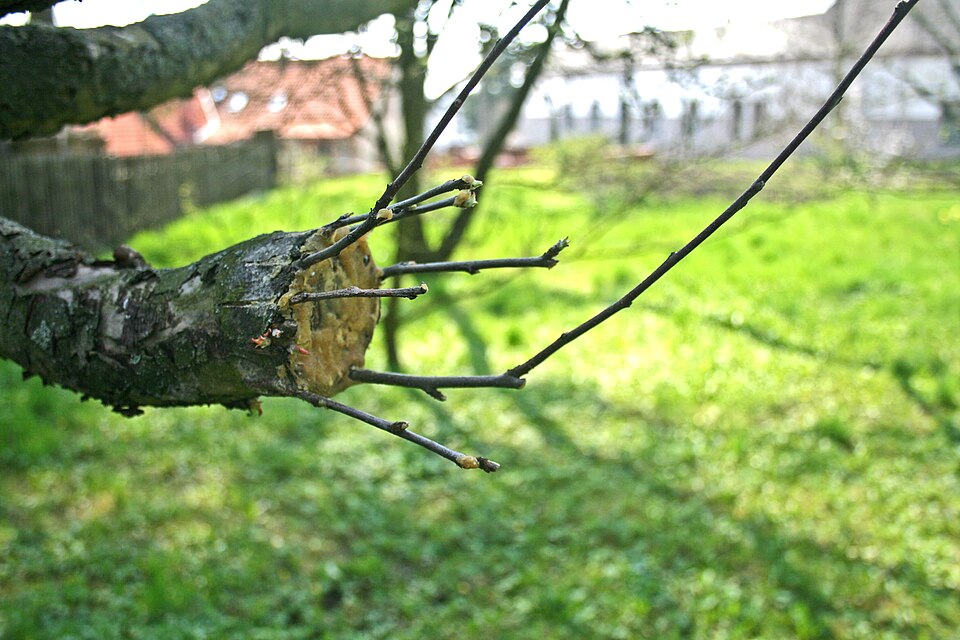
Mika has had a difficult day. At school, other children told her that Jake and Kyra are not her real parents. Yang takes her to an orchard. He shows her a branch from one tree that has been grafted onto another tree. At first, the branch and the tree were separate. Now they grow together, and they are both part of the same tree. Yang explains that Mika is like that branch: she is part of her family, and her Chinese roots are part of her too. The scene is quiet, and very moving. A machine is teaching a child who she is.
Explain the image. What does the grafted branch represent? Why is it important that a machine says this to Mika?
Machines as companions: not only in films
A robot against loneliness (New York State, since 2022). The New York State Office for the Aging has given ElliQ, a small talking robot with a screen, to more than 800 older people who live alone. ElliQ starts conversations, reminds them to take their medicine, suggests exercises and helps them call their families. In 2023, the State reported that 95% of users said they felt less lonely, a figure based on what users declared.
Sources: New York State Office for the Aging, 2023 · Smithsonian Magazine, 2022
A novelist who confided in ChatGPT (Japan, 2024). Rie Kudan, the novelist of session 2, told journalists that, in her own life, she consulted ChatGPT about problems she felt she could not tell anyone. When the AI did not say what she expected, she sometimes put her feelings into the lines of her main character.
Source: CNN, 19 January 2024
Compare with the film: Is ElliQ a little like Yang? What is the difference between a machine that helps and a machine that replaces people? Unlike Yang, ElliQ… · Both… · Whereas…
Drama: Yang’s silence
The film does not hide the pain. Mika is devastated when Yang stops working. At first, Jake treats Yang like a faulty appliance and worries about the warranty and the cost of a repair; little by little, he grieves for him like a member of the family. The memories show that Yang was curious, attentive and perhaps more than a machine. The question of the film is serious: if a machine can love, remember and teach, what makes us human?
Intonation: up or down?
In English, the melody of the voice carries meaning. A statement goes down ↘. A yes/no question goes up ↗. A question with who, what, where, why goes down ↘. A question tag goes down when you are sure and expect agreement, up when you really ask.
Your turn: up or down?
Say each sentence aloud, then choose the melody of the end.
Write: Yang and Mika
Dear diary, today was the worst day of my life. This morning, Yang didn’t answer when I called him. Dad tried to switch him on again, but nothing happened. Yang was not just a robot: he was my big brother. He taught me Chinese words and he showed me the trees in the orchard. When the children at school were mean to me, he was the one who listened. Mum says Dad will find someone to repair him. I wish I could believe her. Tonight, the house is too quiet. I miss his voice.
Yang was bought to teach Mika about China. But was he Chinese? Can you learn a culture from a machine, or only from people who live it?
After Yang (Kogonada, 2022) : Jake et Kyra ont adopté Mika, une petite fille née en Chine. Ils ont acheté Yang, un androïde « techno-sapiens », pour qu’il soit son grand frère et lui transmette sa culture d’origine. Quand Yang tombe en panne, Jake découvre sa mémoire : quelques secondes de vidéo enregistrées chaque jour. Le film pose une question grave : qu’est-ce qui fait de nous des humains ? En intonation : une question fermée (oui/non) monte, une question ouverte (who, what, why…) descend.
| Minutes | Déroulement (55 min) |
|---|---|
| 0 → 5 | Bell-ringer affiché avant l’entrée, appel pendant l’écriture. |
| 5 → 7 | Lecture de trois hypothèses. |
| 7 → 13 | Fiche du film, écoute du résumé, vérification des hypothèses. |
| 13 → 21 | Bande-annonce : premier visionnage sans le son (atmosphère), second avec le son. |
| 21 → 30 | Scène du verger : écoute, explication de l’image de la greffe, puis paragraphe sur le drame. |
| 30 → 40 | Say it right : intonation, répétition, exercice « up or down? » à voix haute en binômes. |
| 40 → 52 | Écriture à trois niveaux. |
| 52 → 55 | Lecture d’un journal de Mika ; correction d’intonation sur une question. |
| Prolongement | Encadré « Real life » (ElliQ, Rie Kudan) : lecture à la maison, puis comparaison orale avec Yang en bell-ringer de la séance suivante (« Unlike Yang, ElliQ… »). |
Film original, rarement étudié en classe : classé PG aux États-Unis (thèmes graves, quelques mots grossiers). Le drame n’est pas édulcoré : la panne de Yang, le deuil de Mika et la question de la mort d’un être artificiel sont au cœur de l’œuvre. Disponible en DVD, Blu-ray et VOD selon les plateformes ; vérifier avant la séance. Sources de l’encadré « Real life » : New York State Office for the Aging (programme ElliQ depuis 2022 ; 95 % des utilisateurs déclarent se sentir moins seuls, chiffre déclaratif publié en 2023) ; CNN, 19 janvier 2024 (Rie Kudan). Lien avec l’axe 3 « Fictions et réalités » (« Quand la science-fiction nourrit l’innovation scientifique »).
Note sur les voix : la montée de l’intonation des enregistrements « ↗ » a été renforcée au montage, car les voix de synthèse ont tendance à descendre en fin de phrase. Faites entendre aussi votre propre voix sur ces exemples. Charte du cours →
Copy these eight words. Underline the strong syllable. No help, no phone: trust your ear.
technology · technological · analysis · analytical · algorithm · predictive · a record · to record
Entrée en cours. Cadre projeté avant l’entrée ; appel pendant le travail. Réutilisation (minutes 5 à 10) : correction immédiate avec les enregistrements de la séance 1 et de la partie 1 ci-dessous ; chaque élève compte ses bonnes réponses et le note dans la marge (il refera le même test en fin de séance).
Session 5 · Phonology and prosody
Pronunciation lab: sound like a speaker, not a reader
Good pronunciation is not about having a perfect accent. It is about being understood easily and sounding confident. Today you work like actors: listen, imitate, record yourself, improve.
Machines do not hear everybody equally
In 2020, researchers at Stanford University tested the speech recognition systems of five big companies (Amazon, Apple, Google, IBM and Microsoft) with recorded interviews of American speakers. On average, the machines got 35% of the words wrong for Black speakers and 19% for white speakers: almost twice as many errors. The reason was the same as in session 3: the systems had learnt mostly from certain voices.
The lesson for you: you do not need to hide your accent. What makes you understood, by people and by machines, is clear word stress, clear vowels and a good rhythm. That is exactly what you train today.
Source: A. Koenecke et al., “Racial disparities in automated speech recognition”, PNAS, April 2020
Same spelling, different stress: noun or verb?
Many two-syllable words have the stress on the first syllable when they are nouns, and on the second when they are verbs.
Noun or verb? Choose the stress
Connected speech: words hold hands
Linking. When a word ends with a consonant and the next one starts with a vowel, they join: It_is_an_artificial_assistant.
Elision. Between two consonants, a /t/ or a /d/ often disappears: nex(t) step, mos(t) difficult.
Assimilation. /d/ + /j/ becomes /dʒ/: would you → /wʊdʒu/, did you → /dɪdʒu/.
Tongue-twisters on the theme
Choose your challenge. B1: the slow version, three times. B1+: the normal version, three times without a mistake. B2: the normal version, from memory, then record yourself on your phone and compare.
Shadowing: speak like a speechwriter
Read the sentence in silence and mark the stressed words. Then shadow the voice: slow version twice, normal version twice, then alone.
Pair work: the pronunciation coach
Student A reads the four tongue-twisters. Student B listens with this checklist, then you swap.
| Criterion | Yes | Not yet |
|---|---|---|
| /θ/ in think, thick, thoughts: tongue between the teeth | ||
| Short /ɪ/ in chip, which, it and long /iː/ in cheap, sleek | ||
| Weak can /kən/ in the middle, strong can /kæn/ at the end | ||
| Words linked, no pause between them | ||
| Clear voice, eyes up, steady rhythm |
Why do you think English word stress is difficult for many learners? Think about strong and weak syllables: in a long English word, only one syllable is strong.
Un mot de deux syllabes qui est à la fois nom et verbe porte souvent l’accent sur la première syllabe quand c’est un nom (a REcord) et sur la seconde quand c’est un verbe (to reCORD). En anglais parlé, les mots s’enchaînent (liaison), certains sons disparaissent (nex(t) step) ou se transforment (would you → « woudjou »). Les virelangues entraînent la bouche, comme des gammes pour un musicien.
| Minutes | Déroulement (55 min) |
|---|---|
| 0 → 5 | Bell-ringer affiché avant l’entrée, appel pendant le travail. |
| 5 → 10 | Correction avec les enregistrements ; chaque élève note son score. |
| 10 → 20 | Encadré « Real life » (2 min), puis partie 1 : paires nom/verbe, répétition, quiz. |
| 20 → 30 | Partie 2 : liaison, élision, assimilation ; répétition chorale puis par rangée. |
| 30 → 40 | Partie 3 : virelangues, chacun choisit son défi. |
| 40 → 47 | Partie 4 : shadowing. |
| 47 → 53 | Binômes « pronunciation coach » avec la grille. |
| 53 → 55 | Même test qu’au bell-ringer : chacun compare ses deux scores. |
Repères du programme (BO n° 22 du 29 mai 2025, terminale) : schémas intonatifs, accentuation du mot selon sa composition et, au niveau B2, selon sa nature (nom/verbe). Voie professionnelle : « l’entraînement à la prise de parole demande un travail spécifique et régulier en vue de l’amélioration de la prononciation » (programme de 2019). Les erreurs sont reprises immédiatement, sans bloquer la prise de parole. Encadré « Real life » à lire en 2 minutes avant la partie 1 (A. Koenecke et al., PNAS, 2020 : taux d’erreur moyen de 0,35 pour les locuteurs noirs, 0,19 pour les locuteurs blancs) ; il désamorce la peur de « l’accent » et recentre sur l’accentuation et le rythme. Charte du cours →
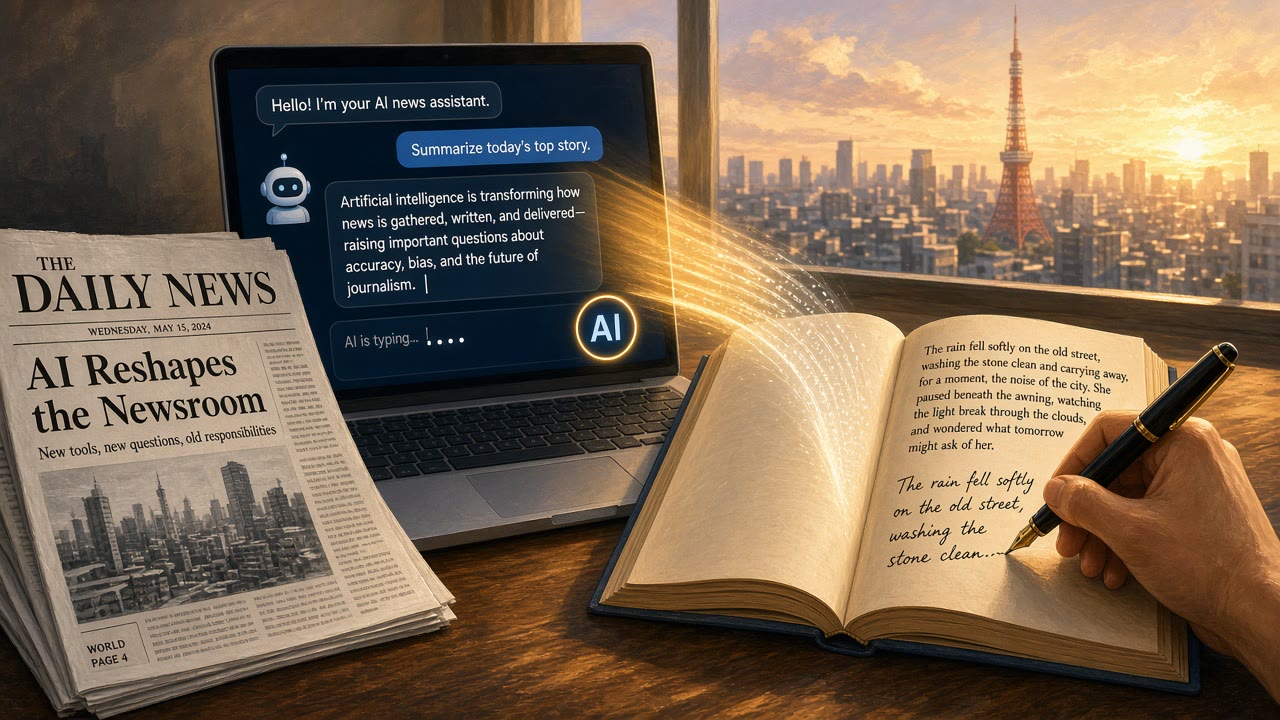 Illustration originale
Session 6 · Media literacy
AI Reshapes the Newsroom
New tools, new questions, old responsibilities.
Look at the newspaper in the picture at the top of this page. Work alone, in your notebook.
- Copy the headline: AI Reshapes the Newsroom. Rewrite it as a full, normal sentence.
- The verb is in the present simple. Is the story about the past, the present or the future?
- Write a headline of six words maximum for this news: “Yesterday, our school decided to allow AI for homework.”
Illustration originale
Entrée en cours. Cadre projeté avant l’entrée ; appel pendant l’écriture. Réutilisation (minutes 5 à 9) : trois titres d’élèves au tableau ; on ne corrige pas encore, on y reviendra avec les règles du headlinese (minute 30) pour les améliorer. Réponses attendues : AI is reshaping / has reshaped the newsroom ; le présent simple des titres raconte un fait passé ou en cours ; School allows AI for homework.
Session 6 · Media literacy · Axis 4: Communication, “Chacun sa vérité ?”
Read the news: how the press tells an AI story
In session 2, you discovered the story of Rie Kudan, the novelist who won a top prize with a little help from ChatGPT. Today, you read it the way journalists write it: you take one real article apart, you learn the special English of headlines, and you compare how two newspapers told the same story. Then you write your own news article.

How the press works
Anatomy of a real article
The core text of this session is a real CNN article, published on 19 January 2024. Read the extracts below, then open the full article.
| Part | What it does | In the CNN article |
|---|---|---|
| Headline | Sums up the story in one line, in big letters. | The winner of a prestigious Japanese literary award has confirmed AI helped write her book |
| Standfirst | One sentence under the headline that adds a detail and makes you want to read. | “After author Rie Kudan won one of the country’s most prestigious literary awards, she admitted she had help from an unusual source.” |
| Lead | The first paragraph: the most important facts, the answers to who? what? when? where? why? how? | “After Japanese author Rie Kudan won one of the country’s most prestigious literary awards, she admitted she’d had help from an unusual source, ChatGPT.” |
| Quote | The exact words of a person, in quotation marks, with a reporting verb. | “I plan to continue to profit from the use of AI in the writing of my novels, while letting my creativity express itself to the fullest,” said the 33-year-old… |
| Key facts | Numbers, names, dates: the details that support the lead. | Around 5% of the book was “word-for-word generated by AI”; committee members called it “practically flawless”. |
| Background | Explains what the reader needs to know. | The novel is about an architect who must build a comfortable high-rise prison in Tokyo. |
| Context | Places the story in a bigger picture. | A photographer refused a prize for an AI image in 2023; famous authors joined a lawsuit against OpenAI; more than 10,000 authors signed an open letter. |
| Reaction | Other voices: experts, officials, the public. | A writer on the prize committee, Keiichiro Hirano, wrote on X that the committee did not see her use of AI as a problem. |
| Ending | The least essential information: the article could be cut here. | On social media, some were interested in her work; others called it “disrespectful” to other authors. |
Core text: “The winner of a prestigious Japanese literary award has confirmed AI helped write her book”, CNN, 19 January 2024. Short extracts quoted for study.
The inverted pyramid
A news article does not tell a story from the beginning to the end. It starts with the most important information and finishes with the least important. Why? Because many readers stop after the first paragraph, and because an editor who needs space can cut the article from the bottom without losing the essential facts.
A novel keeps the surprise for the end. A news article gives you the surprise in the first line.
Find the 5W + H in the lead
“After Japanese author Rie Kudan won one of the country’s most prestigious literary awards, she admitted she’d had help from an unusual source, ChatGPT.”
Said, admitted, claimed: the weight of a reporting verb
Journalists must say who said something: this is attribution (she said, according to the police, the company confirmed). But each verb carries a nuance. Choose what each verb suggests.
Headlinese: the special English of headlines
| Rule | Headline | Normal English |
|---|---|---|
| Present simple for a past event | Novelist reveals AI wrote 5% of prize book | A novelist has revealed that AI wrote 5% of her prize-winning book. |
| to + verb for the future | Authors to sue ChatGPT maker | Authors are going to take the company that makes ChatGPT to court. |
| No articles, no be | Novel praised as flawless | The novel has been praised as flawless. |
| Short, strong words | Juror defends AI winner | row = argument · bid = attempt · hail = praise · quit = leave · slam = criticise |
| Nouns stacked together | AI prize row | an argument about a prize and AI |
| Comma or colon for “says” | AI helped write book, author says | The author says that AI helped her write her book. |
Read headlines like a news presenter
In a headline, almost all the small grammar words have disappeared, so nearly every word is stressed. Read slowly, give each word its weight, and let your voice fall at the end. With a long headline, make a short pause before the main verb.
Note: controversy is stressed CONtroversy in American English and often conTROversy in British English. Both are correct.
Match the headline to the part of the CNN story
Each headline could sum up one paragraph of the CNN article. Listen to it, then choose the paragraph.
Headline → normal English
- Judges hail “practically flawless” novel
- Prize juror defends AI-assisted winner
- Schools to train teachers in AI
- Deepfake “boss” tricks firm into HK$200m transfer
Normal English → headline (6 words maximum)
- The Académie Goncourt has removed a novel from its list because of accusations of AI use and plagiarism.
- New York City is going to allow ChatGPT in its schools again.
- A study has shown that AI detectors are unfair to non-native speakers.
- Our school has decided to write a charter on AI.
Two real headlines about the same event. Copy them, then answer.
A. The winner of a prestigious Japanese literary award has confirmed AI helped write her book (CNN)
B. Akutagawa Prize draws controversy after win for work that used ChatGPT (The Japan Times)
- Who or what is the subject of each headline?
- Which headline makes you think there is a problem? Underline the word.
Entrée en cours (deuxième séance de la partie 6). Cadre projeté avant l’entrée ; appel pendant l’écriture. Réutilisation (minutes 5 à 9) : A : le sujet est la lauréate, le verbe confirmed laisse entendre un aveu ; B : le sujet est le prix, le mot controversy annonce un débat. C’est l’entrée dans la comparaison des cadrages.
Same story, two newspapers: framing
Framing is the way a journalist presents a story: what comes first, which words are chosen, whose voices are heard. Two honest newspapers can report the same facts and still give two different impressions.
| CNN (United States), 19 January 2024 | The Japan Times (Japan), 19 January 2024 | |
|---|---|---|
| Focus of the headline | The winner and what she “confirmed” | The prize and the “controversy” |
| Verb for her words | admitted, confirmed | stated, followed by her full sentence from the acceptance speech |
| Her name, the title | Rie Kudan, The Tokyo Tower of Sympathy | Rie Qudan, Tokyo-to Dojo-to (Sympathy Tower Tokyo) |
| Voices heard | The author, a committee member, other artists and authors around the world | The author and many users of X, for and against |
| Tone | Serious, international: AI and creative jobs | Lively, even humorous: “the first time artificial intelligence walked away with a piece of the prestigious literary award” |
Second text, for comparison only: “Akutagawa Prize draws controversy after win for work that used ChatGPT”, The Japan Times, 19 January 2024.
Which newspaper?
Fact or opinion?
Check before you share: four reflexes
- Who published it? A known newspaper, an agency, an anonymous account?
- Do other reliable media report it? One source is not enough.
- What is the original source? Find the first document: the speech, the study, the official statement.
- Is the image or the voice real? Look for the original picture, the date, an official confirmation. Remember the deepfakes of session 3.
BREAKING!!! Japanese robot writes 100% of prize-winning novel. Judges totally fooled. Share before it’s deleted!
Your task: find at least three problems in this post. Use the CNN article and the four reflexes.
Write: your own news article
Write a news article for your school newspaper about Rie Kudan, about the Orélien affair (be careful: facts only, and use accused of, denies, according to), or about an event linked to AI in your school or your town. Follow the inverted pyramid.
Novelist used ChatGPT for prize book
A young Japanese writer, Rie Kudan, won Japan’s top prize for new writers on 17 January 2024. Her novel is about a prison in Tokyo. After the prize, she said that about 5% of the text came directly from ChatGPT. A member of the prize committee said it was not a problem. On social media, some readers were happy, but others said it was unfair to other writers.
AI-assisted novel wins top Japanese prize
The winner says she will keep working with chatbots
A novel partly written with ChatGPT has won the Akutagawa Prize, Japan’s most prestigious award for new writers of fiction. The author, 33-year-old Rie Kudan, stated in her acceptance speech on 17 January 2024 that “probably about 5%” of the text came directly from generative AI.
Committee members had described Sympathy Tower Tokyo, the story of an architect designing a comfortable prison, as “practically flawless”. One of them, the writer Keiichiro Hirano, later explained that the jury did not see her use of AI as a problem.
Not everyone agrees. On social media, some readers praised her approach, while others called the award unfair to authors who write without AI. The debate is likely to continue as more writers use these tools.
Words from the official programme: journalism
B1: prestigious, to broadcast, partial / impartial, to deceive, high-quality press, (in)accurate, to report, reporter, tabloids, headlines, a piece of news
B2: reliable, trustworthy, unreliable, to mislead, to spread the word, gutter press, to hit the headlines, a flow of information, media literacy
CNN chose “admitted”, The Japan Times chose “stated”. If you were the editor, which verb would you choose, and why? Can a single word be a form of bias?
Un article de presse suit la pyramide inversée : l’essentiel d’abord (le lead, qui répond à qui ? quoi ? quand ? où ? pourquoi ? comment ?), les détails ensuite, le contexte à la fin. Sous le titre (headline), le chapeau (standfirst) donne envie de lire. Les titres anglais ont leur propre grammaire : présent simple pour un fait passé (Novelist reveals…), to + verbe pour le futur (Authors to sue…), ni articles ni be. Le choix d’un verbe introducteur (said, neutre ; admitted, qui suggère une faute ; claimed, qui suggère un doute) suffit à orienter le lecteur : c’est le cadrage (framing).
Deux séances de 55 minutes. Texte support unique : l’article de CNN du 19 janvier 2024 sur Rie Kudan (déjà rencontré en séance 2) ; l’article de The Japan Times ne sert qu’à la comparaison des cadrages.
| Minutes | Séance 6, première heure (55 min) |
|---|---|
| 0 → 5 | Bell-ringer 1 affiché avant l’entrée, appel pendant l’écriture. |
| 5 → 9 | Réutilisation : trois titres d’élèves au tableau, sans correction. |
| 9 → 15 | « How the press works » : lecture en trois groupes (un encadré chacun), restitution d’une phrase par groupe. |
| 15 → 27 | Anatomie de l’article : lecture du tableau, schéma de la pyramide inversée, 5W + H (binômes), correction. |
| 27 → 32 | Verbes introducteurs : quiz, puis remarque sur admitted / confirmed / stated. |
| 32 → 42 | Headlinese : règles, puis amélioration des titres du bell-ringer ; Say it right : lecture des titres (chœur, puis individuellement), appariement titres et paragraphes. |
| 42 → 52 | Réécritures : titre → anglais courant, puis anglais courant → titre (six mots maximum). |
| 52 → 55 | Trois élèves lisent leur meilleur titre comme un présentateur ; vote de la classe. |
| Minutes | Session 6, deuxième heure (55 min) |
|---|---|
| 0 → 5 | Bell-ringer 2 (deux titres réels) affiché avant l’entrée, appel pendant l’écriture. |
| 5 → 9 | Réutilisation : sujet de chaque titre, mot qui oriente. |
| 9 → 20 | Tableau CNN / The Japan Times, quiz « Which newspaper? », débat court sur la neutralité. |
| 20 → 26 | Fait ou opinion, correction justifiée. |
| 26 → 33 | Les quatre réflexes, puis analyse du faux message (binômes) ; lien avec l’affaire Orélien. |
| 33 → 52 | Écriture de l’article à trois niveaux (modèles visibles pour les B1 après 10 minutes seulement). |
| 52 → 55 | Lecture de deux articles ; la classe identifie le lead et les 5W. |
Ancrage. Voie générale : axe 4 « Enjeux et formes de la communication », objet « Chacun sa vérité ? Le défi du complotisme » ; lexique « Journalisme » du programme (BO n° 22 du 29 mai 2025). Voie professionnelle : « comprendre, analyser et rendre compte d’articles de presse » ; « prendre toute leur part dans la lutte contre la manipulation de l’information » (programme de 2019). Dans le débat de la séance 7, les journalistes réutilisent directement le titre et le lead.
Faits vérifiés dans les deux articles : CNN (titre, chapeau, attaque, citations de Rie Kudan et de Keiichiro Hirano, « around 5% », « practically flawless », contexte Eldagsen, procès contre OpenAI, lettre ouverte de plus de 10 000 auteurs) ; The Japan Times, article de Thu-Huong Ha (verbe stated, citation complète du discours, réactions sur X, comparaison avec les échecs et le go). Les titres en headlinese autres que ceux de CNN et du Japan Times sont rédigés pour l’exercice. Charte du cours →
Copy and complete in your notebook. Work alone.
- If I were the head teacher, I would… (one rule about AI)
- If students use AI for homework, they will…
- If Rie Kudan had not used ChatGPT, …
Underline the verb in each part of your sentences.
Entrée en cours. Cadre projeté avant l’entrée ; appel pendant l’écriture. Réutilisation (minutes 5 à 9) : trois phrases au tableau, une par ligne ; on entoure les deux verbes de chaque phrase : c’est l’entrée dans les règles ci-dessous. Les phrases fausses (If I would be…) sont gardées pour l’encadré des erreurs.
Session 7 · Grammar and interaction
The debate: a school board meeting
In the United States, many public schools are run by a school board: elected members who decide rules and budgets in public meetings, where parents, teachers and students can speak. Tonight, the board must answer one question.
Grammar focus: the conditional
Step 1 · would, could, might, should + base verb
These modals are followed by the base verb: no to, no -s, no -ing.
| Modal | Meaning | Example |
|---|---|---|
| would /wəd/ | an imagined result | A ban would change nothing at home. |
| could /kəd/ | a possibility, an ability | AI could help us revise. |
| might | a weaker possibility (maybe) | It might make mistakes. |
| should /ʃəd/ | advice, a recommendation | We should check every answer. |
If you copy the answer, you won’t learn anything.
→ It can really happen tomorrow.
If AI replaced teachers, students would learn alone.
→ It is not true now; we imagine it. With be: If I were…
If the jury had known, would it have chosen another book?
→ It is too late: we imagine a different past.
Conditionals with weak forms and contractions
In natural speech, would, could, had and have are not stressed. would → /wəd/ · I would → I’d /aɪd/ · it would → it’d /ˈɪtəd/ · would have → /ˈwʊdəv/ · wouldn’t have → /ˈwʊdnəv/ · could have → /ˈkʊdəv/. Never write “would of” or “could of”: it is only the sound of have.
The facts behind the examples: Rie Kudan spoke about ChatGPT herself in her acceptance speech (session 2); the detectors tested by AFP disagreed, and the accusation against Thélyson Orélien relied on one tool (session 3).
Common mistakes
| Wrong | Right | Why |
|---|---|---|
| If AI | If AI replaced teachers… | Never would after if: use the past simple. |
| If you | If you copy, you won’t learn. | No will after if: the present simple already expresses the future. |
| If the jury | If the jury had known… | The past perfect goes after if; would have goes in the other part. |
| Students would | Students would learn | Modal + base verb. |
| It | It would have been easier. | /ˈwʊdəv/ is written would have. |
| If I | If I were the chair… | were for all persons in careful English, at the exam and in a charter. |
Practise at your level
First and second conditionals
Second and third conditionals
Third conditional and past modals
Use it in the debate and in the charter
In the debate: If we banned AI, students would… · If I were a parent, I’d… · What would happen if…? · If the school had listened to students, we wouldn’t have…
In the charter (session 8): each group writes at least one second and one third conditional to justify a rule.
Should students be allowed to use AI for their homework?
- Write your best argument for, in one sentence.
- Write your best argument against, in one sentence.
Use: because · so · otherwise · as long as
Entrée en cours. Cadre projeté avant l’entrée ; appel pendant l’écriture. Réutilisation : chaque élève recopie ses deux phrases sur deux papiers ; ils deviennent les cartes d’arguments distribuées aux rôles du débat (minute 20).
The meeting begins
Computer voices: George (British English, chair), Heart (American English, parent) and Emma (British English, student).
Transcript
Chair: Good evening, everyone. Tonight, the school board must decide one question: should students be allowed to use AI for their homework? Let’s hear the first speakers.
Parent: As a parent, I’m worried. If my son lets a chatbot write his essays, what is he actually learning? I’d like a clear rule: no AI for graded homework.
Student: With all due respect, I disagree. Banning it won’t work: students will use it at home anyway. I’d rather we learnt to use it well. For example, a chatbot can quiz me before a test, but the answers must be mine.
Chair: That’s a fair point. So, what exactly would count as cheating?
Student: Copying an answer and pretending it’s your own work. Asking for help to understand is not cheating.
Who says what?
Polite but firm: phrases for debating
In a debate, the melody matters as much as the words: a calm, falling voice sounds confident; a rising voice sounds unsure.
Real positions to quote in the debate
Strong debaters quote real facts. Each role can use one of these cards, with its date and its source.
Source of the third card: Russell Group, “Principles on the use of generative AI tools in education”, July 2023.
The roles
Speak: your part in the debate
Is it possible to write a rule that everybody accepts? What would a good compromise look like?
Aux États-Unis, beaucoup d’écoles publiques dépendent d’un school board, un conseil élu qui décide en réunion publique. Tu joues un rôle : parent, élève, professeur, entreprise, délégué à la protection des données, journaliste ou président de séance. Pour être convaincant, parle d’une voix posée qui descend en fin de phrase.
Deux séances de 55 minutes. Première heure : Grammar focus (le conditionnel). Deuxième heure : le débat.
| Minutes | Séance 7, première heure : Grammar focus (55 min) |
|---|---|
| 0 → 5 | Bell-ringer « Lesson 1 » affiché avant l’entrée, appel pendant l’écriture. |
| 5 → 9 | Réutilisation : trois phrases d’élèves au tableau, verbes entourés. |
| 9 → 16 | Étape 1 (modaux + base verbale), puis les trois conditionnels : un exemple oral par élève volontaire. |
| 16 → 26 | Say it right : formes faibles et contractions (chœur, puis rangées, puis individuellement, vitesse lente puis normale). |
| 26 → 31 | Erreurs fréquentes : on corrige les phrases fausses du bell-ringer. |
| 31 → 46 | Exercices à trois niveaux avec auto-correction (bouton Check) ; chacun commence à son niveau et passe au suivant ; le professeur circule. |
| 46 → 52 | Production : chaque binôme écrit deux phrases au conditionnel pour le débat (une au second, une au troisième). |
| 52 → 55 | Lecture de trois phrases avec les formes faibles ; elles serviront de cartes d’arguments. |
| Minutes | Session 7, deuxième heure : le débat (55 min) |
|---|---|
| 0 → 5 | Bell-ringer affiché avant l’entrée, appel pendant l’écriture. |
| 5 → 12 | Écoute du début de la réunion, quiz « Who says what? ». |
| 12 → 20 | Say it right : phrases du débat, intonation descendante, répétition en chœur puis en binômes. |
| 20 → 28 | Attribution des rôles, distribution des cartes d’arguments du bell-ringer et d’une carte « Real positions » par rôle, préparation en groupes de rôle (mots-clés seulement). |
| 28 → 48 | Débat : le président de séance mène, le professeur chronomètre et note les interventions. |
| 48 → 51 | Vote du conseil. |
| 51 → 55 | Les journalistes lisent leur titre et leur lead (méthode de la séance 6) ; retour du professeur sur deux points de langue. |
Grammaire : les exemples s’appuient sur des faits vérifiés (Rie Kudan a parlé elle-même de ChatGPT ; les détecteurs testés par l’AFP ont divergé) et formulent des hypothèses, jamais des accusations. Évaluation de l’interaction possible (voie pro : entraînement à la partie 2 de la situation B ; voie générale : expression orale en interaction) : réagir, reformuler, justifier, intonation et clarté. Source de la carte « British universities » : Russell Group, principes de juillet 2023 ; les autres cartes reprennent les sources des séances 2, 3 et 6. Charte du cours →
Copy the seven criteria. Tick the ones you are ready for. Circle the one you will work on today.
- I can explain why a school needs rules on AI.
- I can give three principles with an example each.
- I use modals: must, should, can’t, are allowed to.
- I use connectors: first, moreover, however, to sum up.
- I justify a rule with a second and a third conditional.
- I stress the right syllables and use weak forms.
- I speak from key words, not from a written text.
Entrée en cours. Cadre projeté avant l’entrée ; appel pendant le travail. Réutilisation : chaque groupe annonce le critère qu’il travaille ; pendant les répétitions, le professeur passe en priorité sur ce critère.
Session 8 · Final task
Final task: our class AI charter
The charter
In groups of three, write a charter of three to five principles. For each principle: a rule and a reason or an example. Use at least one second and one third conditional to justify your rules. Reuse your work from the sessions: the policies of session 2, the warning labels and the rules on detectors of session 3, the four reflexes of session 6, the arguments of the debate.
| Level | Length |
|---|---|
| B1 | 100 to 120 words |
| B1+ | 120 to 150 words |
| B2 | 180 to 200 words, with a short introduction and a concession |
The presentation
Present your charter in 4 to 5 minutes, then answer questions for 5 minutes. You may use a plan and key words, not a written text.
Voie professionnelle: this is training for situation B of the bac pro exam (up to 5 minutes of continuous speech, then up to 5 minutes of interaction). Voie générale: this trains you to speak at length, argue and react to questions.
A model presentation (about one minute)
Computer voice: Emma (British English).
Transcript
Good morning. Today, we would like to present our class charter on artificial intelligence. First, why do we need one? Because AI is already in our pockets, and we believe that rules are better than silence. Our charter has three principles. One: AI can help us learn, but it must never think for us. We can use it to quiz ourselves, or to explain a word, but every answer we hand in must be our own. Two: we always check. Chatbots make mistakes and can invent sources, so we compare what they say with at least one reliable source. Three: we protect our data. We never share our names, photos or personal information with an AI tool. To sum up, AI is a powerful tool, but the thinking is our job. Thank you for listening. We are happy to answer your questions.
Analyse the model: find the introduction, the three principles, the connectors and the conclusion. Then make your presentation longer and more personal: your presentation must last 4 to 5 minutes.
Language toolkit
Rules
Students must… · Students are allowed to… · Students are not allowed to… · AI should never… · We can’t… · Every answer must be…
Reasons and examples
because… · so that… · otherwise… · for example… · as the Gender Shades study showed…
Conditionals (Grammar focus, tab 7 →)
If a student uses AI, they must say so. · If we banned AI completely, students would use it at home anyway. · If the school had written rules earlier, the debate wouldn’t have been so hard.
Structure
First… · Moreover… · However… · Although… · To sum up… · That is why…
Interaction
That’s a good question. · Let me explain. · In other words… · I’m not sure I understand: do you mean…?
Before you present
Mark your text: underline the stressed syllables of the long words (session 1), circle the weak forms (session 2), draw ↗ or ↘ at the end of each question (session 4), mark the weak forms of would, I’d, would have (session 7), and link the words that hold hands (session 5). Then shadow the conclusion of the model.
Assessment grid (out of 20)
| Criterion | Points |
|---|---|
| Content: three to five clear principles, each with a reason or an example from the learning journey | 5 |
| Organisation: introduction, connectors, conclusion | 3 |
| Language: modals, conditionals (at least one second and one third), connectors, vocabulary from the programme | 4 |
| Pronunciation: word stress, weak forms, intonation, clear sounds | 4 |
| Interaction: understands the questions, answers with details, reformulates | 4 |
A real charter: the Russell Group principles (United Kingdom, July 2023)
In July 2023, the 24 leading research universities of the United Kingdom published five principles on generative AI in education. Notice how short and clear they are: a subject, a modal or will, an action.
- Universities will support students and staff to become AI-literate.
- Staff should be equipped to support students to use generative AI tools effectively and appropriately in their learning experience.
- Universities will adapt teaching and assessment to incorporate the ethical use of generative AI and support equal access.
- Universities will ensure academic rigour and integrity is upheld.
- Universities will work collaboratively to share best practice as the technology and its application in education evolves.
Compare: which principle would you keep for our class? Which one is missing for a lycée?
Source: Russell Group, July 2023
Final quiz
Par groupes de trois, rédigez une charte de classe sur l’IA : trois à cinq principes, chacun avec une règle et une raison ou un exemple tirés de la séquence (les principes de 24 grandes universités britanniques, publiés en juillet 2023, donnent un modèle réel). Puis présentez-la pendant 4 à 5 minutes, à partir d’un plan et de mots-clés (pas de texte rédigé lu), avant 5 minutes de questions. En voie professionnelle, c’est l’entraînement à la situation B de l’épreuve.
| Minutes | Déroulement (2 × 55 min) |
|---|---|
| 0 → 5 | Bell-ringer (critères) affiché avant l’entrée, appel pendant le travail. |
| 5 → 12 | Écoute et analyse du modèle (structure, connecteurs) ; lecture rapide des principes du Russell Group (forme : sujet, modal ou will, action). |
| 12 → 40 | Rédaction de la charte par groupes ; le professeur circule en priorité sur les critères entourés. |
| 40 → 52 | Préparation orale : texte annoté (accent, formes faibles, intonation), répétition en shadowing. |
| 52 → 55 | Chaque groupe lit son premier principe ; ordre de passage de la séance suivante. |
| Séances de présentation | Bell-ringer : relire ses mots-clés et s’entraîner à voix basse pendant l’appel (5 min). Puis 10 minutes par groupe (présentation de 4 à 5 min, échange de 5 min), soit quatre à cinq groupes par séance ; les autres élèves notent une question par groupe. |
Voie professionnelle : épreuve définie par l’arrêté du 17 juin 2020 (annexe V, BO n° 30 du 23 juillet 2020), situation B, 10 minutes, deux parties de 5 minutes maximum. Les chartes peuvent être affichées en classe et comparées à la charte du cours. Charte du cours →
Pour le professeur · Principes de la séquence
Charte du cours
Le désordre en classe n’est pas une fatalité. Il naît le plus souvent d’un cours qui n’a pas été pensé pour les élèves qui sont devant nous, et d’une organisation qui prive le professeur des premières minutes. Cette charte réunit les principes qui fondent cette séquence et toutes les autres.
- Un cours exigeant est la première règle de disciplineLe chahut vient d’abord de cours trop pauvres, où il n’y a rien à comprendre, ou de cours qui ne sont pas conçus pour les élèves. Un contenu riche, clair et bien construit retient l’attention mieux que n’importe quelle sanction.
- Le professeur se montre à la hauteurIl maîtrise son sujet, prépare chaque séance et doit pouvoir impressionner ses élèves : par ce qu’il sait, par ce qu’il leur fait découvrir, par la qualité de sa langue. Une classe respecte un cours qui l’élève.
- Élever le niveau sans effrayerRenoncer à l’exigence ne protège personne : à force de plier l’échine et de baisser le niveau, le professeur perd le respect de la classe et les élèves perdent ce qu’ils sont venus chercher. On exige beaucoup, et l’on donne les moyens d’y parvenir : modèles, enregistrements, étapes claires, trois niveaux d’exigence.
- Concevoir le cours pour les élèves réelsLe cours est pensé pour ces élèves-là : leur niveau, leur curiosité, leur futur métier ou leurs études. Il est ensuite dispensé comme il faut : consignes brèves, supports prêts, voix posée, rythme soutenu.
- Pas une seconde d’ennuiChaque minute est prévue. Les élèves ne doivent jamais avoir le temps de s’ennuyer, car l’ennui ouvre la porte au bazar. Les transitions sont préparées et la tâche suivante est toujours prête.
- Les cinq premières minutes décident de toutC’est au début du cours que tout peut basculer. L’appel, la sortie des cahiers et la mise en route cassent le démarrage de la séance. Ces minutes ne doivent pas rester vides : une tâche d’entrée en cours, affichée avant l’arrivée des élèves, les met au travail dès qu’ils entrent, pendant que le professeur fait l’appel. Cette tâche est ensuite reprise dans la séance ; elle n’est jamais un simple passe-temps.
- Rendre les premières minutes à l’enseignementLes cours deviennent aussi ingérables parce que l’on demande au professeur d’accomplir des tâches administratives avant même que le cours commence : faire l’appel, renseigner PRONOTE, déposer les exercices en ligne, alors que la classe suivante arrive déjà. Ces tâches ont leur utilité, mais elles devraient être prises en charge ailleurs, à un autre moment, par d’autres personnes ou selon une autre organisation. C’est l’organisation d’ensemble qui est à repenser, pour que les premières minutes appartiennent à l’enseignement.
- Être présent dans sa têteLe professeur fait cours l’esprit libre, attentif à la classe et au contenu, et non guidé par la peur du chahut. La peur pousse à improviser ; la préparation libère.
- Boire et aller aux toilettes : mon engagementDans mon cours, chaque élève peut garder une gourde d’eau sur sa table et boire quand il en a besoin, même pendant qu’il travaille : de l’eau uniquement, pas de soda ni de boisson sucrée. Je ne refuse jamais d’aller aux toilettes à un élève qui en a besoin. Empêcher quelqu’un de boire ou d’aller aux toilettes est cruel, et cela ralentit le cerveau. Nos élèves sont des corps vivants : bien s’hydrater aide leur santé et diminue la fatigue. J’ai remarqué que les jeunes étudiants chinois gardent tous une gourde en classe ; c’est un geste simple que je veux voir dans ma salle.In my class, you may keep a water bottle on your desk and drink whenever you need to, even while you work: water only, no sodas. If you need the toilet, I will never say no.
Repères vérifiés sur l’eau et l’attention
C. J. Edmonds et D. Burford, « Should children drink more water? The effects of drinking water on cognition in children », Appetite, 52(3), 2009, p. 776-779 (doi:10.1016/j.appet.2009.02.010) : 58 enfants de 7 à 9 ans ; ceux qui ont reçu de l’eau en plus se disent moins assoiffés et réussissent mieux des tâches d’attention visuelle.
D. Benton et N. Burgess, « The effect of the consumption of water on the memory and attention of children », Appetite, 53(1), 2009, p. 143-146 (doi:10.1016/j.appet.2009.05.006) : 40 enfants d’environ 8 ans et demi ; meilleure mémoire après 300 ml d’eau, sans effet mesuré sur l’attention soutenue.
Ces deux études portent sur de jeunes enfants et de petits effectifs : elles invitent à la prudence, mais vont dans le même sens. Côté santé publique, Manger Bouger (Santé publique France) rappelle que l’eau est « la seule boisson recommandée » et conseille de limiter le plus possible sodas et boissons sucrées ; le NHS recommande 6 à 8 verres de liquide par jour et précise que les enfants devraient éviter complètement les boissons gazeuses sucrées.
Un cours bien conçu et bien mené est la meilleure protection du professeur et le premier respect dû aux élèves.
Ce que cela change dans cette séquence
Chaque séance s’ouvre sur une tâche d’entrée en cours de cinq minutes, à projeter avant la sonnerie (bouton Project full screen) ; l’encadré professeur donne un minutage minute par minute ; chaque tâche principale existe en trois niveaux ; un atelier de prononciation exigeant figure dans chaque séance.
« Mettre du beau partout où je passe. » Put beauty wherever I go.